Tuesday, June 28, 2011

New Aviaries are on their way!!


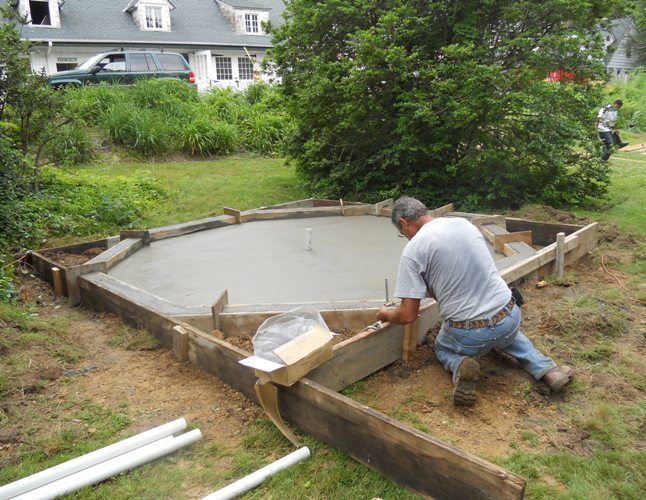
As you saw in our previous post, templates were laid for aviary foundations to be poured. I am happy to report that work has finally begun!


One of the fifteen foot foundations being detailed.


These will be our two 20 foot aviaries.


A wider view of several aviaries in progress.


The foundations are just about done and the next step is constructing the framework of our brand new aviaries. Keep us bookmarked for more updates and photos of our exciting move!


Friday, May 20, 2011

New Photos on our Move

The big question on everybody's minds these days is "Are you over at the new place yet?"

While we wish that answer was yes, we aren't over there yet. Building discoveries, permit applications, etc., always take much longer than one can anticipate, but we're happy to report that things are moving along there. I was over there on Wednesday and took some photos of the progress that has been made on the building.
Here we go!:

Above is our new door to the Admissions area :)


This will be the Admissions area, with the back room being our Exam Room


This will be our Recovery area; several aviaries will be built in this room,
allowing young birds to practice flying before heading to outdoor aviaries. It also serves as aviaries for adult birds as they progress through their recuperation.

This is where we will have some office space set up, and a small area for storage.


This is the outside aviary where our permanent education raptor enclosures will be.

Keep checking back for new pictures and developments as we continue building our new home!


Sunday, April 10, 2011

Ring-billed Gull Release!


On February 18th, we received a Ring-billed Gull from Eileen, a fellow wildlife rehabilitator. This gull had been found at a Brooklyn train station and was unable to fly. Eileen gave the gull a physical exam upon admission and noticed that the left wing was hanging lower than the right, which indicated a fracture of the humerus. The humerus is the bone that connects the shoulder and the elbow. Humeral fractures are quite common but they can be tricky- the ability for us to treat a fracture depends on where the fracture happened. Because it can be difficult to tell where a fracture is on the bone, wildlife rehabilitators tend to work closely with referring veterinarians that have X-ray equipment. With an X-ray, one can tell with more accuracy where the fracture is and thus how best to undergo treatment. Thankfully, Eileen was able to obtain an X-ray from her referring veterinarian. What they saw in the X-ray was good news! The fracture was on the middle of the bone, so there was a good chance that the gull’s wing would heal enough so that it would be able to fly again.
       After the gull was transferred to us, we began immediate treatment. We wrapped the wing so that it would hang in its natural position, and used another wrap to secure it to the body so that the wing was immobilized. This type of wrap is useful for preventing unnecessary movements of the wing (which could cause further injury), very much like an arm cast does in humans. After the wrap was on for about four days, we took it off and gave the wing physical therapy by slowly extending it and allowing it to snap back into its original position. We then gave the gull a bath so he could further exercise his wing, and then re-wrapped it for a few more days. After two weeks of doing that, we saw that the wing sat in a more natural position so we opted to keep the wrap off. This gull was well on his way to recovery!
As the weather became nicer, we put him in a large aviary outside to get some exercise. By this time, we were well into the month of March. The gull had shown a little bit of flight, but not too much. Finally, on March 29th, a volunteer mentioned that she had watched the gull fly and hover several feet in the air. The next day, as I was weighing the gull, he flew out of my hands and around our nursery, just reaching the ceiling! He was almost ready to go. Over the next two days, we noticed him flying wonderfully around his outdoor aviary. On April 2nd, a lovely spring day, he was released with full flight after a long recovery at Sunken Meadow beach.

Photo credit: http://chrissiatkisson.blogspot.com/2009_08_01_archive.html

Friday, January 14, 2011

Running into an Owl!


On December 19th, 2010, we received a call regarding an injured Eastern Screech Owl. The adult female grey phase Eastern Screech Owl was found in the road by Patrick of Northport while he was on his Sunday morning run! After finding the owl, Patrick ran home to get a box. He returned with box in hand and carefully placed the screech owl into the box and began to search for help. Luckily, he was put in touch with us and the owl was brought to our hospital soon after.

When the owl arrived, she was very cool and in shock. She was warmed up and examined. Her hefty weight of .180 kilograms indicated she was likely a female and a well-fed one at that! Unfortunately, she was pretty banged up from her ordeal (presumably an automobile collision.)
The owl was unable to stand upright. Examination of her eyes revealed vision loss in her right eye. Blood could be seen in the eye and her right eye showed no response to movement or light. Fortunately, her left eye appeared unharmed. In addition to her eye damage, the owl had a severe injury to her shoulder. The position of her wing at a harsh upward angle along with severe swelling in the shoulder region indicated a probable fracture of the coracoid. The coracoid is a bone in the chest cavity that helps to stablize the wing to the sternum to allow flight. Fractures of the coracoid will usually ground the bird temporarily, if not forever. Coracoid fractures are made even trickier to treat due to the bone's proximity to bird's internal organs.


We rehydrated the owl and started her on medication for the swelling. We stabilized her wing with a wrap that secured the wing in its natural position to the body. She was then set up to calm down from her stressful day. For several days following her initial trauma, the owl remained in critical condition. She had to be fed via feeding tube and after a few days she graduated to small rodent pieces. By the fourth day, she was able to perch on the soft towel in her cage. We continued to work with the wing over the course of the next ten days. The swelling subsided and she began to hold her wing in the correct position! Gradually, her damaged eye became more responsive as well. In early January, we were able to move her to a larger aviary to practice flight and to test her vision and hunting abilities. Luckily, the owl did better than we could have imagined!

On January 13th, almost a month after her ordeal, the owl was ready for release! She was released at the Makamah Preserve in Northport in the early afternoon to give her time to get her bearings before nightfall. The two volunteers who released her reported that she flew beautifully up to a tree branch.

Monday, November 8, 2010

Golden-crowned Kinglet


On October 29th, a pint sized little bird was brought to our hospital after his unfortunate encounter with a glass window in Huntington. The Golden-crowned Kinglet, weighing only 6 grams, was very alert but unable to stand on his small legs. Surprisingly, despite his inability to support his weight, his tiny yet powerful wings still allowed him to get around a bit. We set our patient up in a small mesh cage with some food to rest from his ordeal.

The next morning we came in to find the kinglet's food bowl was empty. He had eaten all of his food overnight although he was still not able to use his legs to perch or grip. A couple days later, the kinglet became harder and harder to catch from his enclosure. His flight was much improved and he started to slowly regain the use of his legs. On Wednesday, November 4th, we determined the kinglet had fully recovered from his ordeal and was ready for release. However a storm was coming through the following day so we decided to hold on his release until Friday. Early Friday afternoon the clouds parted, the rain moved out of the region and the Golden-crowned Kinglet returned to freedom.

Golden-crowned Kinglets spend their summers north of Long Island and make their way down to Long Island as they migrate south in the fall. They can be identified by their beautiful yellow or golden spot on the top of their head.

Sunday, October 10, 2010

Fall Migration and Window Collisions - by Eileen Hagerman

This is the time of year in which we receive many telephone calls about small birds that have collided into people's windows. They are often confused with being a baby bird, but we can rule that out at this point, as "baby season" is over.

Often with window collisions, there is no visible injury: the bird is stunned and can often recover quickly. Other times, it can take longer. You may notice the bird appears puffed up or hunched over; in other cases, it looks like the bird has a broken neck (head is cocked upside down). It is actually not a broken neck, but a head injury where the symptoms are known as torticollisis, or "stargazing".(see photo below of Red-tailed Hawk). In any case, the bird can be gently placed into a cardboard box (such as a shoebox) with one or two small holes poked in the box for ventilation. Put the box in a dark, quiet place such a garage or a bathroom and allow it some time to recover. If after an hour or two the bird is still incapacitated, contact us or another rehabilitator for further assistance. Do not try to feed the bird, or give it water: a dark, quiet place, and some time are all it needs at this point.


Why does this happen? There are several reasons:

Vision: While it is fairly easy for most birds to avoid building and large objects, they can have difficulty perceiving transparent obstacles, such as windows and other panes of glass. Furthermore, when plants are displayed inside on a windowsill, this makes it look as if a safe flyway exists.

Migration (which is happening now): Adult birds, often mistaken as baby birds, are often found colliding into windows each fall. These birds are birds that have migrated back to our area. Tired after travelling perhaps a thousand miles, they are often confused by windows and/or lighted buildings. New York City is a major flyway for migrating birds, and in an attempt to reduce collisions at this time of year, NYC has instituted a "Lights Out" program to reduce the number of collisions.


Territory: While this situation usually happens in the spring, it is still worth mentioning.
Sometimes birds intentionally crash into windows (and side view mirrors of cars, glass doors, etc); this is usually territorial. There is either a nest nearby or the bird is seeing its reflection and defending its territory. Try to put something up to block his reflection, and they usually move onto something else.


What can you do to help? There are several steps you can take:
-Have bird feeders either far back in the yard, or within a few feet of the window. This leaves less room for the birds to fly; window strikes will occur at a slower speed and the bird is less likely to be hurt.
-Avoid placing plants on your windowsill, as this can be confusing to birds.
-Reduce window reflections by having screens or shades covering the window. Blinds are also helpful, as they can be moved to reduce reflections while still allowing you to see outside.
-Purchase items that help prevent window collisions>
*Collidescape: A thin transparent film that attached to the window. Visit this website for a demonstration on how it works.

Below are a few photos of birds that have come into our hospital after colliding with a window:

Top photo: This is a Red-tailed Hawk that collided through a picture window last Christmas Eve.
She shattered the window and took off half of her beak
(visible in the photo).
Unfortunately, after 4 months, due to damage
done to the bony core of her beak, structurally her
beak would not grow back and we had to make the
difficult decision to put her to sleep.

Second photo: Palm Warbler that collided into a window. This bird was released.


This is an example of "stargazing" - see how this bird is holding
his head cocked sideways?
This is a very young Red-tailed Hawk that came into our facility
after suffering head trauma. His recovery took a long time, and
at a crucial age developmentally, he became very accustomed to
people, growing up around them. He is one of our permanent
Education Animals (Baby) and can be seen any day in our outside aviary,
where he lives with his female friend, Lucky Lady.

Thursday, September 30, 2010

A few weeks ago, we received a call from someone whose cat had caught a Mourning Dove, rendering it unable to fly. Even without an obvious injury, any animal that has been caught by a cat needs to be admitted for antibiotics, as cats have a bacteria in their saliva that can get into the bloodstream of their prey.
(See this PDF for more information)

When the bird arrived, I immediately noticed a tremendous amount of swelling in this little fledgling's left wing. After administering a dose of pain medication, I was even more concerned to see that this little guy had also suffered a crop tear. (The crop is the part of a bird where they store food, prior to digestion). However, it seemed that this injury was on its way to healing, which made me curious as to when this happened. I spoke further with the donor, and it turned out the cat had caught the bird about 4 days before. Since the crop was almost healed, and learning that the injury was almost a week old, I cleaned the area up and set the bird up for cage rest, but was still very guarded for this little patient.

Over the course of the next week, he grew stronger and feistier. Mourning doves are amazing birds; I have seen them overcome some very horrific injuries (hawk attacks, cat attacks, being hit by cars). For such a small bird, they certainly can overcome, so each day I grew more hopeful for this little guy.

On Monday, we came in to a bird that refused to be caged any longer. After giving him a few days in an outside aviary to strengthen his muscles, I am thrilled to say that he was released yesterday:

I wish I could have gotten a photo of him flying away, as he did so beautifully, but he was one wild bird that flew 60 feet into the air to the highest point, where no one or nothing could get him. The above photo is one I took inside the aviary, before he was released.

I couldn't have asked for a better moment.